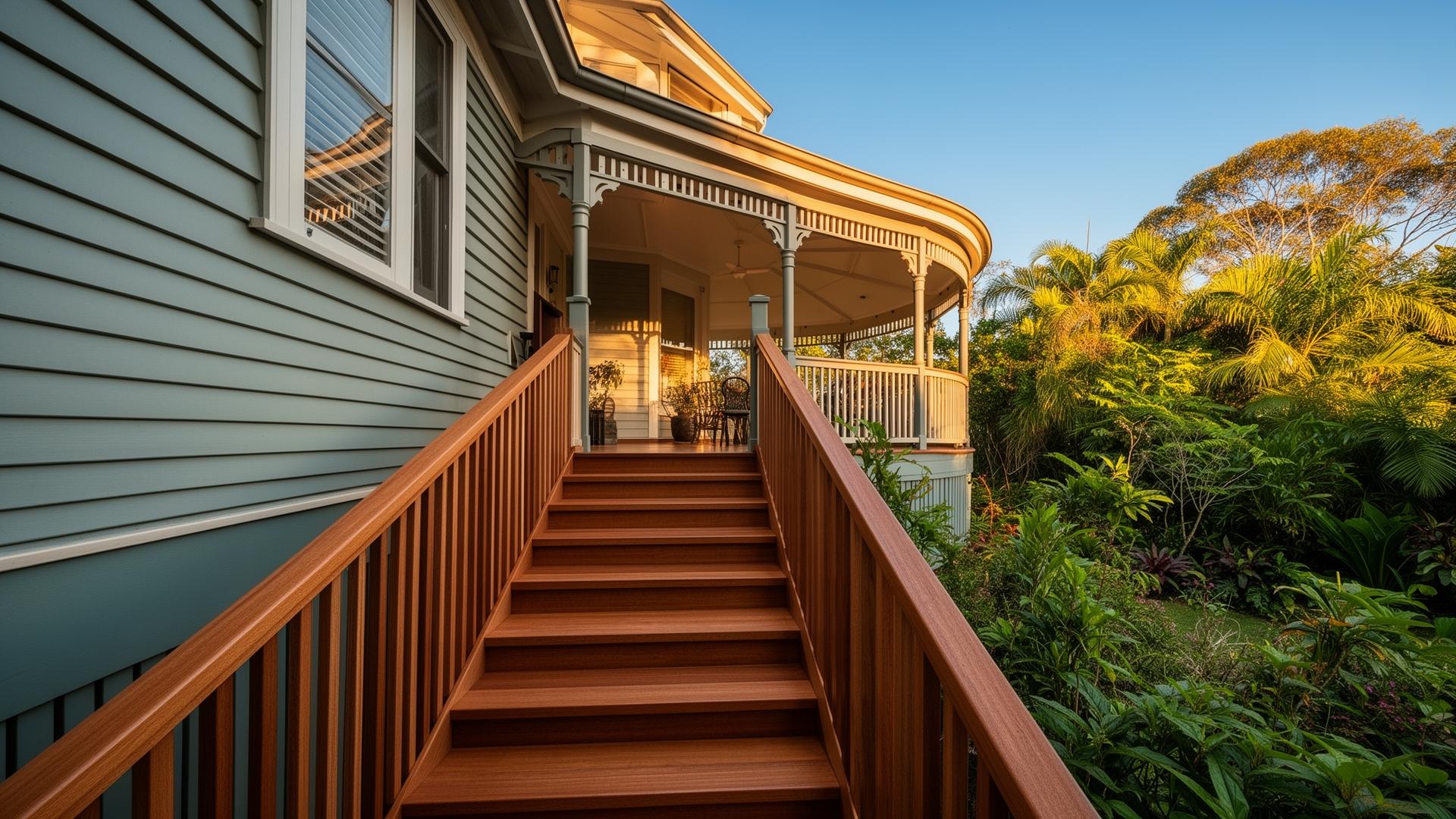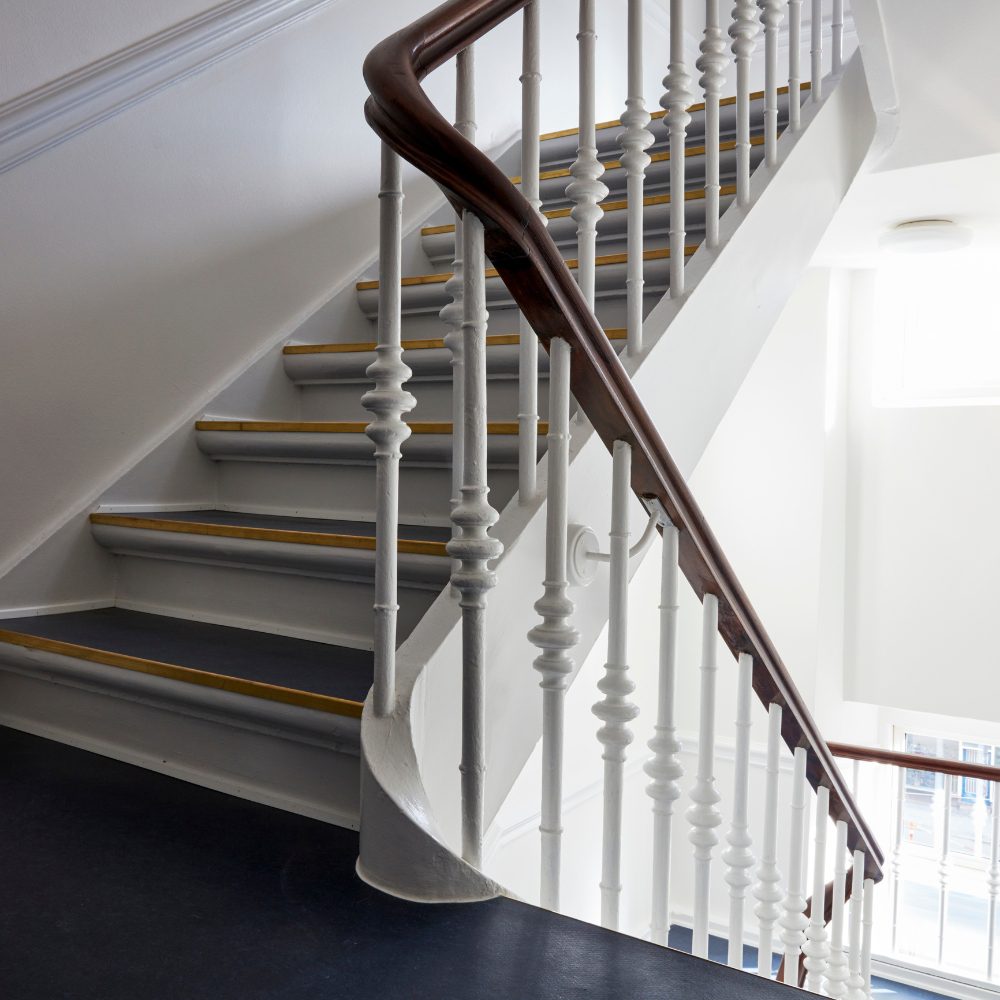
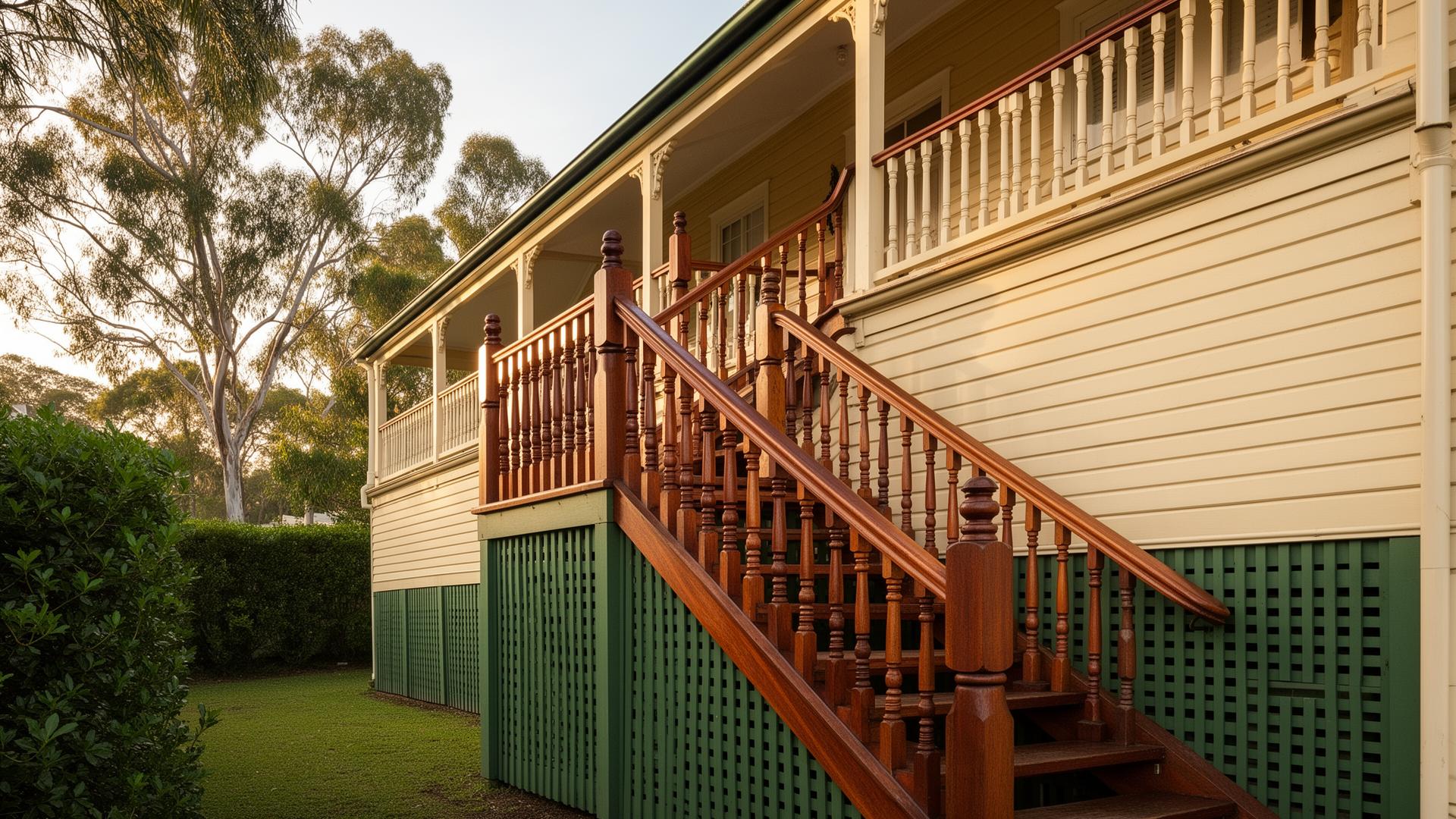
Queenslander external stairs are the most recognisable element of South-East Queensland's heritage homes — turned hardwood balusters, painted stringers and treads weathered to a soft silver. Replacing or restoring them well takes more than carpentry.
It takes a builder who understands heritage detailing, character overlays and modern NCC 2022 compliance in equal measure. This guide walks through every consideration for a respectful, code-compliant rebuild.
What Defines a Traditional Queenslander External Stair
The classic Queenslander stair sits proud of the home, raised on hardwood posts above a lattice-screened understorey. It almost always has turned balusters between hardwood stringers, a moulded handrail, and a wide bottom step that doubles as a welcome landing.
Think about it this way: the stair is the home's handshake. It frames the verandah, sets the proportion of the facade, and signals the era the home was built in.
Signature features to preserve
- Turned timber balusters — usually 38mm or 45mm square stock turned to ogee, sausage or barrel profiles.
- Newel posts with capping detail at the top and bottom of each flight.
- Painted stringers and balusters in a heritage colour (Mission Brown, Indian Red, Colorbond Stone or a Federation cream).
- Hardwood treads oiled or clear-coated to show the grain.
- Open risers with a 125mm maximum gap to allow airflow under the home.
Heritage-Sensitive Design (Materials & Detailing)
A character-correct Queenslander stair starts with material selection. Modern engineered timbers, polished aluminium spindles and frameless glass have no place on a pre-1947 home — they read as a renovation, not a restoration.
Timber species to use
Spotted Gum, Ironbark, Tallowwood and Blackbutt are the four species that suit Queenslander work. They turn cleanly on a lathe, weather gracefully, and match the species used in original 1900-1940 builds.
For a fuller comparison, see our guide on types of timber for staircases in Australia.
Baluster profile
Match the existing profile if any original balusters survive. If they don't, the local Brisbane City Council Heritage Unit can usually provide era-appropriate templates within a fortnight.
Handrail and newel detailing
Use a moulded hardwood handrail with a quirk and bead detail. Newel posts should sit on a chamfered plinth and finish with either a square cap or a turned acorn finial.
NCC 2022 & QBCC Compliance Without Losing Character
Here's where most heritage renovations come unstuck: the original 1920s geometry rarely meets modern codes. The good news is that NCC 2022 leaves enough room to keep the look while passing inspection.
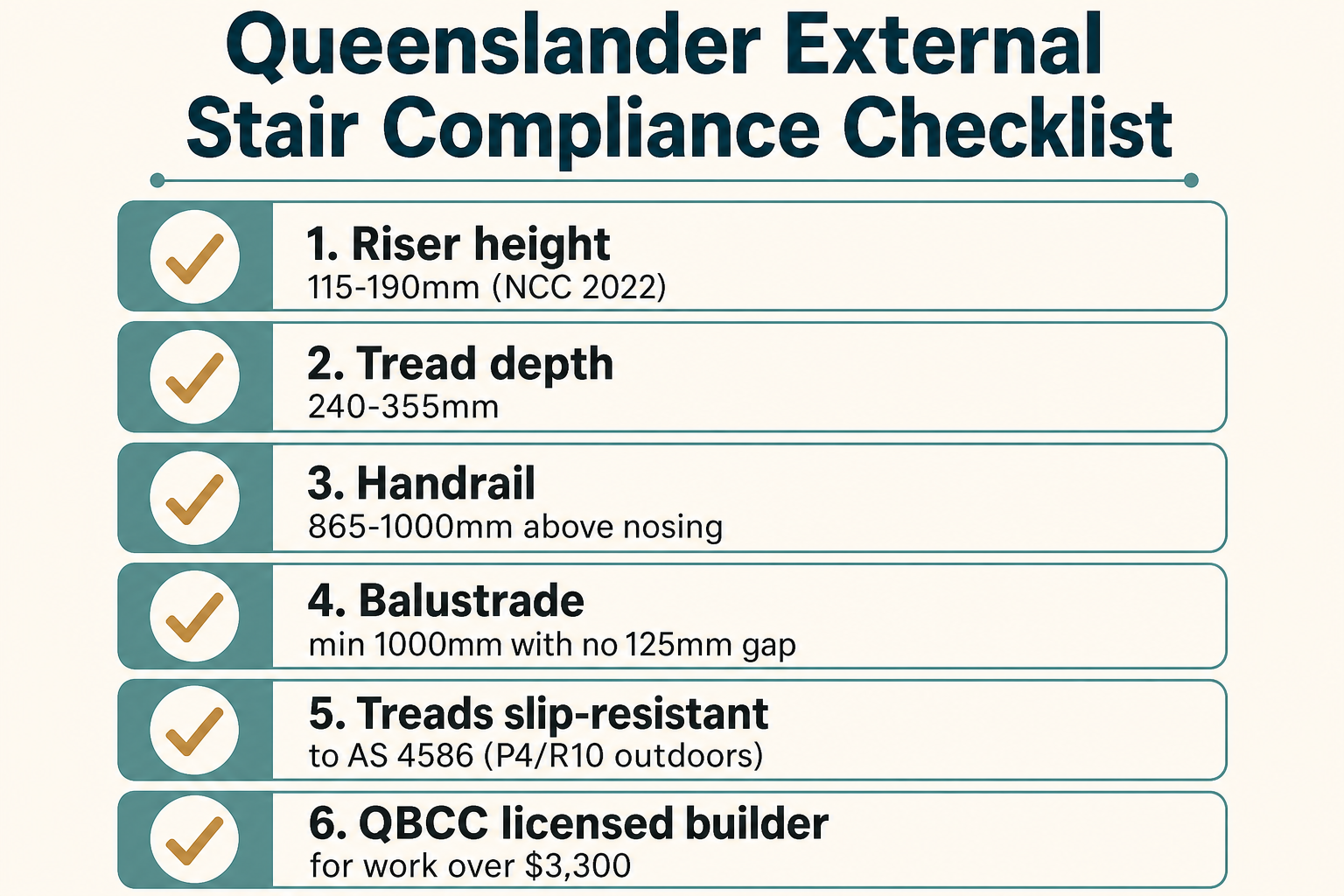
For Queensland-specific regulations across all stair types, see our stair regulations in Queensland guide and our handrail requirements QLD breakdown.
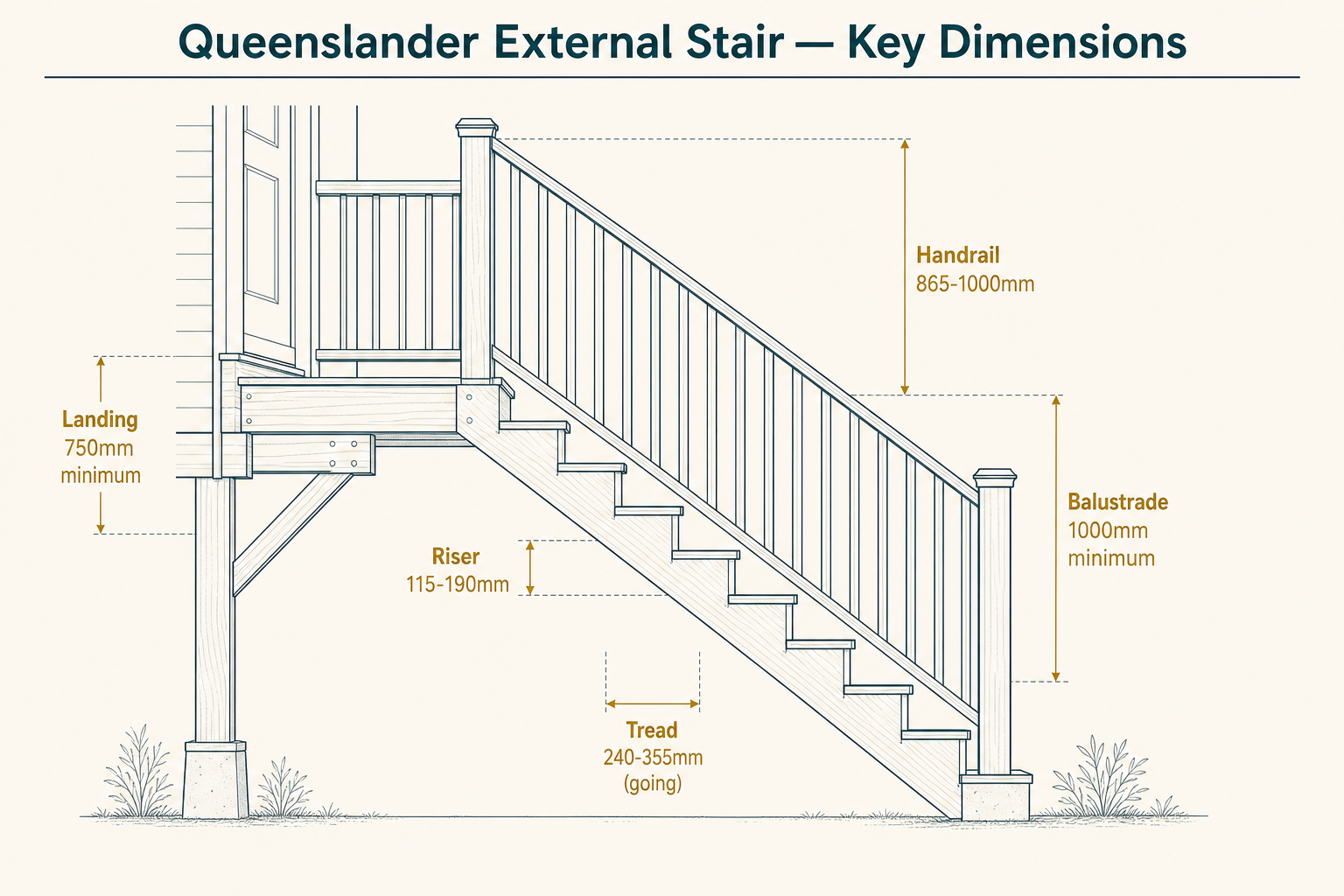
Key Dimensions at a Glance
The diagram below summarises the dimensions every Queenslander external stair must hit under NCC 2022. Keep this handy when you're talking to your builder.
Where heritage and code most often collide
- Riser height: Many original Queenslanders have 200-220mm risers. New work must be 115-190mm — usually means adding one or two extra risers to the flight.
- Baluster gap: Originals were often 130-140mm. Code now caps the gap at 125mm, which usually means one extra baluster per bay.
- Handrail height: Originals were often 800mm. NCC 2022 requires 865-1000mm above the nosing.
Cost & Timeline Expectations
A new Queenslander-style external stair in Brisbane typically costs $12,000 to $24,000 in 2026, supplied and installed. The wide range reflects the cost of bespoke joinery work for turned balusters and moulded handrails.
For a full breakdown of how those numbers move, see our external timber stairs cost in Brisbane (2026 guide).
Typical timeline
- Week 1-2: Site measure, design and quote.
- Week 3-5: Council or certifier approval (longer if a character overlay applies).
- Week 5-9: Workshop joinery — turning balusters, milling stringers and treads.
- Week 9-10: Demolition of old stair, install, finish and final certification.
Maintenance in SEQ Climate
Brisbane's subtropical climate puts external stairs through extreme cycles: 30°C+ summer days, intense UV, heavy storm rain and Moreton Bay salt spray. A well-built Queenslander stair handles all of it — with light routine care.
Annual care
- Sweep treads clear of leaf litter monthly to prevent moisture retention.
- Wash with a soft brush and diluted bicarb solution twice a year — never use a pressure washer.
- Inspect newel-post bases for rot or termite mudding each spring.
Refinishing cycle
Plan to re-oil hardwood treads every 3-5 years and repaint stringers and balusters every 8-10 years. Get a QBCC-licensed builder to inspect every 5 years and replace any softened treads early.
Craftsman Stairs has been restoring and rebuilding Queenslander external stairs across Brisbane and Moreton Bay since 1989 (QBCC Licence 69007, ABN 86 475 603 796). For a heritage-sensitive quote, see our full external timber stairs Brisbane and Sunshine Coast page or call 0439 730 583.
Frequently Asked Questions
Do Queenslander external stairs need a heritage overlay approval in Brisbane?
If your property sits in a Brisbane City Council Character Residential or Traditional Building Character overlay, replacement of the front external stair usually requires a development application focused on form, materials and detailing. A rear stair often does not. Your QBCC-licensed builder or a private certifier can confirm your overlay in 24 hours.
What's the best timber for a Queenslander external staircase?
Spotted Gum and Ironbark are the two go-to choices. Both are Class 1 or 2 durability above ground, hold turned baluster profiles cleanly, and silver gracefully if left unfinished. Spotted Gum is roughly 20% cheaper and easier to source.
Can you keep the original Queenslander look while meeting modern codes?
Yes. The current NCC 2022 standards allow heritage-style turned balusters, low-profile handrails and traditional stringer details — provided the geometry (riser, going, handrail height, infill gap) hits compliance numbers. A skilled builder hides the compliance work inside authentic detailing.
How much does a new Queenslander external staircase cost in 2026?
Expect $12,000 to $24,000 for a standard hardwood Queenslander-style staircase with turned balusters in Brisbane, supply and install. Character-overlay approval, specialty joinery and lead-paint removal can push complex jobs to $30,000 or more.
How long does a Queenslander stair build take from quote to install?
Typical timeline is 6 to 10 weeks: 1-2 weeks for measure and design, 2-3 weeks for council or certifier approval, 2-4 weeks of joinery for turned balusters and stringers, and 2-3 days on site for install.
Should I oil or paint my Queenslander stair treads?
On a Queenslander, painted stringers and balusters with oiled or clear-coated hardwood treads is the most authentic combination. It also makes future maintenance much easier — you re-oil the treads on a 3-5 year cycle without disturbing the painted joinery.
Craftsman Stairs
QBCC licensed staircase builders with over 35 years of experience servicing North Brisbane, Moreton Bay and the Sunshine Coast. We design, manufacture and install custom staircases for residential and commercial projects.
Get a Free Quote