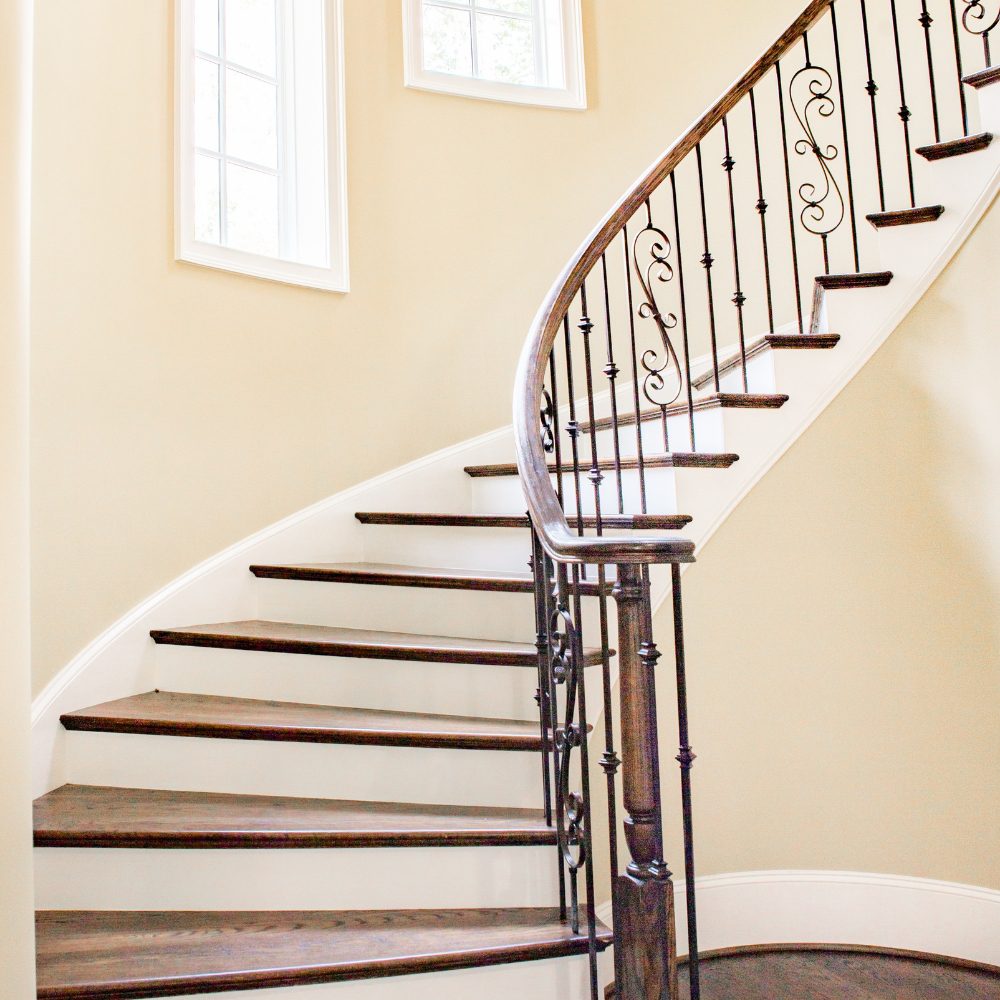
Ensuring your staircase complies with Queensland building regulations protects your family's safety, your property's value and your legal position. This guide provides a comprehensive overview of staircase compliance requirements for homeowners in Brisbane, Moreton Bay and the Sunshine Coast.
Overview of QLD Compliance
Staircase construction in Queensland is regulated by the National Construction Code (NCC) as adopted under the Building Act 1975 and enforced by the Queensland Building and Construction Commission (QBCC). Compliance is mandatory for all new construction, renovations and alterations involving staircases.
The relevant sections of the NCC include:
- Part 3.9.1 — Stair construction (dimensions, landings, headroom)
- Part 3.9.2 — Balustrades and barriers
- Part 3.8.1 — Handrails
- Part 3.7.1 — Fire safety (egress staircases)
Key Regulations Summary
Here's a consolidated summary of the critical compliance requirements:
- Riser height: 115mm–190mm, consistent within 5mm (design rules)
- Tread going: Minimum 240mm
- Formula: 2R + G = 550mm–700mm
- Maximum risers per flight: 18 (riser limits)
- Headroom: Minimum 2,000mm
- Handrail height: 865mm–1,000mm (handrail details)
- Balustrade height: 865mm on flights, 1,000mm on landings (balustrade details)
- Gap restriction: No 125mm sphere passage
- Slip resistance: R10 minimum for external stairs (slip resistance guide)
- Lighting: Adequate illumination with two-way switching (lighting guidelines)
Compliance Checklist
Use this checklist to verify your staircase meets QLD requirements:
- ☐ All risers between 115mm and 190mm with maximum 5mm variation
- ☐ All treads have a minimum going of 240mm
- ☐ 2R + G formula satisfied (550mm–700mm)
- ☐ No more than 18 risers per flight
- ☐ Landings at least 750mm deep and equal to staircase width
- ☐ Headroom clearance at least 2,000mm throughout
- ☐ Handrails on required sides at correct height (865mm–1,000mm)
- ☐ Handrails graspable (32mm–65mm diameter or equivalent)
- ☐ Handrails extend 300mm+ beyond top and bottom risers
- ☐ Balustrades at correct height (865mm flights, 1,000mm landings)
- ☐ No gaps allowing 125mm sphere to pass through
- ☐ No climbable horizontal elements between 150mm–760mm
- ☐ External treads have adequate slip resistance
- ☐ Adequate lighting with two-way switching
- ☐ Built by QBCC licensed builder
Risks of Non-Compliance
- Failed inspections — Building certifiers will not approve non-compliant work
- Council orders — Local councils can issue show cause or rectification notices
- Insurance issues — Insurers may reject claims for injuries on non-compliant staircases
- Liability — Property owners can be held legally liable for injuries caused by non-compliant structures
- Sale difficulties — Non-compliant building work must be disclosed and can significantly reduce property value
Certification Process
- Building approval — Submit plans to a registered building certifier before construction begins
- Frame inspection — Certifier inspects structural elements before they're concealed
- Final inspection — Completed staircase is inspected for compliance with approved plans and the NCC
- Certificate of classification — Issued when all work is approved as compliant
Existing Staircases
Staircases built under previous versions of the building code are generally not required to be upgraded unless significant work is undertaken. However, if you're renovating or altering an existing staircase, the work must comply with the current NCC. Common triggers include:
- Replacing the balustrade or handrails
- Changing the staircase configuration (adding or removing treads)
- Structural modifications to the staircase or supporting structure
- Change of building classification (e.g., residential to commercial)
Craftsman Stairs (QBCC Licence #69007) ensures full regulatory compliance on every project. Contact us for expert guidance on your staircase project across Brisbane, Moreton Bay and the Sunshine Coast.
Frequently Asked Questions
What happens if my staircase doesn't comply with QLD regulations?
Non-compliant staircases can result in failed building inspections, council orders to rectify or remove the structure, insurance claim rejections, liability for injuries, and difficulties selling the property. Rectification costs often exceed the original build cost.
Do old staircases need to comply with current regulations?
Existing staircases built under previous codes are generally 'grandfathered' and don't need to be upgraded to current standards unless significant renovation or alteration work is undertaken. However, if you modify an existing staircase, the modified portions must comply with current NCC requirements.
Who inspects staircases in Queensland?
A registered building certifier inspects staircase construction as part of the overall building inspection process. They verify compliance with the approved plans and the NCC. The QBCC may also investigate complaints about non-compliant building work.
Craftsman Stairs
QBCC licensed staircase builders with over 35 years of experience servicing North Brisbane, Moreton Bay and the Sunshine Coast. We design, manufacture and install custom staircases for residential and commercial projects.
Get a Free Quote